
Een verhandeling over ambt, offer en waarheid in het licht van de Boodschap van Jezus’ Barmhartige Liefde
door Pastoor Geudens
Algemene inleiding
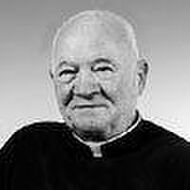
Dit artikel (1) behoort tot het theologisch-pastorale oeuvre van pastoor Armand Ory (1927–2002), priester van het bisdom Luik, en moet worden gelezen tegen de achtergrond van de kerkelijke en culturele ontwikkelingen in West-Europa in de tweede helft van de twintigste eeuw. Het werd geschreven in de jaren 1970–1980, in een context van afnemende priesterroepingen, groeiende theologische polarisatie en een toenemende sociologische benadering van Kerk en ambt. Ory beoogt hier geen academische synthese, maar een principiële en kerkelijk verantwoorde verdediging van het sacramentele priesterschap, gelezen in het licht van Schrift, Traditie en de Boodschap van Jezus’ Barmhartige Liefde. De tekst (2) wordt hier gepubliceerd zonder inhoudelijke herwerking, met behoud van zijn polemische scherpte en pastorale ernst.
Inleiding – Een tijd van verwarring en verarming
De Kerk van onze tijd bevindt zich in een diepe crisis, die vaak sociologisch of organisatorisch wordt benoemd, maar in wezen geestelijk en theologisch is.[1] Het dreigend tekort aan priesters in het vrije Westen is geen toevallig verschijnsel, maar een symptoom van een dieperliggende ontworteling: het verlies van het bovennatuurlijke perspectief op Kerk, ambt en sacrament.[2]
In deze context klinkt de Boodschap van Jezus’ Barmhartige Liefde (2 mei 1971) niet als een vrome stem, maar als een profetische aanklacht én opdracht:
“Vraag mijn priesters, dat ze mijn volk herbronnen in de Liefde en de Waarheid. De priester draagt het merkteken van zijn God, het is onuitwisbaar…”[3]
Deze woorden (3) plaatsen het priesterschap opnieuw in zijn ware licht: niet als functie, niet als sociologische rol, maar als sacramenteel merkteken, gegrift in de ziel, ten dienste van Gods heilswerk in de wereld.[4]
1. De priester: geen gids onder velen, maar drager van het sacrament
In onze tijd wordt steeds vaker geroepen om “gidsen” en “herders”, terwijl het woord priester schijnbaar wordt vermeden. Men wil richting, begeleiding en nabijheid — maar zonder het offer, zonder het sacrament, zonder het mysterie.[5]
Deze verschuiving is fundamenteel misleidend. Want honderd gidsen en duizend herders kunnen geen ene Eucharistie vieren.[6]
De priester is niet inwisselbaar omdat hij iets doet, maar omdat hij priester is geworden door de wijding. Hij staat in de Kerk niet op grond van bekwaamheid, maar op grond van zijn deelname aan het ene Priesterschap van Christus.[7]
Wanneer het priesterprofiel vervaagt in opleidingen, wanneer seminaristen hun roeping moeten zoeken “als een rietstengel in een rietveld”, dan is dat geen pedagogisch toeval, maar een theologische ontsporing.[8]
2. De valse gulden middenweg: tussen klerikalisme en priesterloosheid
Men spreekt graag over een “gulden middenweg” tussen een zogenaamd klerikale Kerk en een priesterloze Kerk. Maar deze tegenstelling is vals gesteld.[9]
Een priesterloze Kerk is geen correctie op klerikalisme, maar een ontkenning van de sacramentele structuur die Christus zelf aan zijn Kerk heeft gegeven.[10] Evenmin is een Kerk met vele roepingen per definitie scheefgetrokken. Integendeel: overvloedige en zuivere roepingen zijn het teken van geestelijke gezondheid.[11]
De pijnlijke realiteit is dat in sommige Westerse contexten het verdwijnen van de priester niet wordt betreurd, maar verwacht, soms zelfs gewenst. Parochies zonder inwonende pastoor worden voorgesteld als “kansen”, terwijl men vergeet dat hiermee het hart van het kerkelijk leven — de Eucharistie — structureel wordt uitgehold.[12]
3. Jezus heeft wel degelijk een nieuwe godsdienst gesticht
Een kernpunt van de huidige verwarring ligt in een verzwakt christologisch bewustzijn. De stelling dat Jezus “geen nieuwe godsdienst heeft gesticht” wordt vaak herhaald, maar is theologisch onhoudbaar.[13]
Jezus is niet enkel hervormer van Israël, maar de Zoon van God, ware God en ware mens.[14] Zijn leerlingen hebben Hem aanbeden (vgl. Mt. 28,17). Dáárom is Hij gekruisigd (vgl. Joh. 19,7). Dáárom bestaat het christendom.[15]
Wie ontkent dat Jezus een nieuwe godsdienst heeft gesticht, ondergraaft onvermijdelijk zijn Godheid. En wie zijn Godheid relativeert, tast ook het priesterschap aan dat uit Hem voortkomt.[16]
4. Het Laatste Avondmaal: oorsprong van het priesterlijk ambt
Het is geen anachronisme te zeggen dat Jezus tijdens het Laatste Avondmaal zijn apostelen tot priesters heeft aangesteld. Het betreft een dogmatische waarheid, verankerd in de Heilige Schrift en de levende Traditie van de Kerk.[17]
“Doet dit tot mijn gedachtenis.” (Lc. 22,19; 1 Kor. 11,24)
Met deze woorden heeft Christus vissers omgevormd tot bedienaren van zijn offer.[18] Dat Hij geen kazuifel droeg, is irrelevant. De essentie van de wijding ligt niet in uiterlijke vormen, maar in de overdracht van macht en zending.[19]
Wie deze oorsprong relativeert, doet dat niet uit historische zorgvuldigheid, maar om het offerkarakter van de heilige Eucharistie — en daarmee het priesterschap zelf — te ondermijnen.[20]
5. De Kerk is geen maatschappij als alle andere
Veel kritiek op hiërarchie is gebaseerd op een marxistisch geïnspireerde maatschappijanalyse, die de Kerk reduceert tot een machtsstructuur van bestuurders en onderdanen.[21]
Maar de Kerk is een maatschappij sui generis, geboren uit Openbaring, niet uit sociaal contract.[22] Haar hiërarchie is geen machtsladder, maar een dienststructuur ten dienste van de waarheid (vgl. Lc. 22,26–27).[23]
De priester staat niet boven de gelovige omdat hij slimmer is, maar omdat hij gezonden is om te bewaren, te vieren en door te geven wat hij zelf ontvangen heeft (vgl. 1 Kor. 11,23).[24]
Creativiteit mag nooit uitlopen op het herscheppen van geloofsinhoud of liturgie. Waar dit toch gebeurt, wordt niet de Kerk rechtgezet, maar het mysterie ontmanteld.[25]
6. Jezus, de Hogepriester van het Nieuwe Verbond
Het is misleidend Jezus een “leek” te noemen. Hij behoorde niet tot de joodse priesterklasse, maar Hij is volgens de Hebreeënbrief de enige en eeuwige Hogepriester (vgl. Hebr. 4,14; 7,24).[26]
Zijn kruisdood was geen louter moreel drama, geen toevallig gevolg van “radicale mensendienst”, maar een werkelijk kruisoffer — geen ritueel, maar wel degelijk verzoenend en heilbrengend:[27]
“God was het die in Christus de wereld met zich verzoende.” (2 Kor. 5,19)
Wie het offerkarakter van het kruis ontkent, ondergraaft ook de Eucharistie en daarmee het bestaansrecht van de priester.[28]
Slot – De priester als teken van hoop in een tijd van duisternis
De Boodschap van Jezus’ Barmhartige Liefde laat geen twijfel bestaan: de priester is onuitwisbaar gemerkt, blootgesteld aan zware bekoringen, maar onmisbaar voor het heil van de zielen.[29]
In een tijd waarin “blinden blinden leiden” (vgl. Mt. 15,14) en de mens zichzelf tot god verheft, is de priester geroepen getuige te zijn van een andere werkelijkheid: die van Kruisoffer, Waarheid en Jezus’ Barmhartige liefde.[30]
Niet door macht, maar door trouw.
Niet door aanpassing, maar door overgave.
Niet door zichzelf, maar door Christus.
Wie de priester wegdenkt, dooft het licht bij de Bron.
Nawoord – Waarom Armand Ory vandaag opnieuw gelezen moet worden
De actualiteit van deze tekst ligt niet in haar polemiek, maar in haar criteriologische helderheid. Pastoor Armand Ory herinnert eraan dat de crisis van het priesterschap geen organisatorisch probleem is, maar een geestelijke crisis die raakt aan het hart van het geloof zelf. Waar het offerkarakter van de H. Eucharistie vervaagt, verliest ook het ambt zijn bestaansgrond.
In een kerkelijke context waarin synodaliteit dreigt te worden gereduceerd tot proces en structuur, houdt Ory vast aan wat niet maakbaar is: het sacramentele merkteken, de apostolische zending en de onherleidbare band tussen priester, Eucharistie en Kruis. Juist daarom is zijn stem vandaag opnieuw nodig — niet om terug te keren naar het verleden, maar om de toekomst te toetsen aan haar Bron.
Dit nawoord wil geen correctie zijn op Ory, maar een uitnodiging om zijn teksten te lezen als geestelijke toetssteen: niet alles wat vernieuwt is evangelisch, maar alles wat evangelisch is, vernieuwt.
Bronnen en noten
- (1) Oorspronkelijk artikel, zie: Website Legioen Kleine Zielen, artikel van Armand Ory: https://hetlegioenkleinezielen.com/2016/12/10/armand-ory-de-priester-in-het-gedrang/
- (2) Tijdschrift ‘Het Legioen Kleine Zielen’, Orgaan van het Legioen Kleine Zielen van Het Barmhartig Hart van Jezus, Uitgever G. De Winter, Deurne, Achttiende Jaargang, Nr. 4, December 1990, blz. 9-17.
- (3) Volledige Boodschap van Jezus Barmhartige Liefde: “Vraag mijn priesters, dat ze mijn volk herbronnen in de Liefde en de Waarheid. De priester draagt het merkteken van zijn God, het is onuitwisbaar en als zodanig heeft hij recht op de diepste eerbied vanwege al mijn kinderen. De dwaling en de ontrouw van sommige leden van de Heilige Kerk kan het Stempel niet uitwissen waarmee de Heer hun ziel gemerkt heeft. Bidt met grote naastenliefde voor uw priesters die blootstaan aan verschrikkelijke bekoringen. Mijn kleine zielen, stelt uw trouw en uw liefde tegenover de machten van het kwaad die de wereld beheersen met hun ketterijen. Blinden leiden blinden op dit ogenblik. Ze hebben alle zin voor de bovennatuurlijke realiteiten verloren en de mens is een god geworden voor de mens. Ze aanbidden wat ze moesten verbranden. Op listige wijze doden zij God in de zielen. De liefde heeft antennes die de golven van het kwaad opvangen en deze teniet doen. Maar wie de liefde niet heeft is verloren” (2.5.1971).
[1] Paulus VI, Apostolische Exhortatie Evangelii Nuntiandi (8 december 1975), nr. 20: Acta Apostolicae Sedis 68 (1976), 19–20.
[2] Johannes Paulus II, Apostolische Exhortatie Pastores Dabo Vobis (25 maart 1992), nr. 10: AAS 84 (1992), 668–669.
[3] Boodschap van Jezus’ Barmhartige Liefde, 2 mei 1971, particuliere openbaring, verspreid binnen het Legioen van de Kleine Zielen.
[4] Catechismus van de Katholieke Kerk (1997), nr. 1581–1584; vgl. Concilie van Trente, Sessio XXIII (15 juli 1563), Decretum de sacramento Ordinis.
[5] Congregatie voor de Clerus, Directory for the Ministry and Life of Priests (31 januari 2013), nr. 2.
[6] Tweede Vaticaans Concilie, Decreet Presbyterorum Ordinis (7 december 1965), nr. 2.
[7] Catechismus van de Katholieke Kerk, nr. 1548; vgl. Hebr. 5,1.
[8] Armand Ory, De priester in het gedrang, Sint-Lambertuskring, s.l. 2016; online beschikbaar via het Legioen van de Kleine Zielen.
[9] Benedictus XVI, Toespraak tot de Romeinse Curie, 22 december 2005.
[10] Tweede Vaticaans Concilie, Dogmatische Constitutie Lumen Gentium (21 november 1964), nr. 28.
[11] Johannes Paulus II, Pastores Dabo Vobis, nr. 35.
[12] Vgl. Congregatie voor de Bisschoppen, Apostolorum Successores (2004), nr. 43–44.
[13] Congregatie voor de Geloofsleer, Verklaring Dominus Iesus (6 augustus 2000), nr. 13: AAS 92 (2000), 758–759.
[14] Concilie van Chalcedon (451), Definitie van het geloof: “unum eundemque Filium… perfectum in deitate et perfectum in humanitate, verum Deum et verum hominem”; vgl. Joh. 1,1–14.
[15] Vgl. Mt. 28,17; Joh. 19,7.
[16] Catechismus van de Katholieke Kerk, nr. 430–451.
[17] Concilie van Trente, Sessio XXIII (15 juli 1563), Decretum de sacramento Ordinis, can. 1–4: “Si quis dixerit, in Ecclesia catholica non esse hierarchiam divinitus institutam, quae constat ex episcopis, presbyteris et ministris, anathema sit.” 1–4.
[18] Vgl. 1 Kor. 11,23–26.
[19] Catechismus van de Katholieke Kerk, nr. 1577–1578.
[20] Johannes Paulus II, Encycliek Ecclesia de Eucharistia (17 april 2003), nr. 29: AAS 95 (2003), 455–456.
[21] Vgl. kritische analyse bij A. Ory, De priester in het gedrang.
[22] Tweede Vaticaans Concilie, Lumen Gentium, nr. 8.
[23] Vgl. Lc. 22,26–27.
[24] Vgl. 1 Kor. 11,23.
[25] Congregatie voor de Goddelijke Eredienst en de Regeling van de Sacramenten, Instructie Redemptionis Sacramentum (25 maart 2004).
[26] Vgl. Hebr. 4,14; 7,24.
[27] Vgl. Rom. 3,25; Hebr. 9,12.
[28] Catechismus van de Katholieke Kerk, nr. 1366–1367.
[29] Boodschap van Jezus’ Barmhartige Liefde, 2 mei 1971.
[30] Vgl. Mt. 15,14; Rom. 1,25.

Je moet ingelogd zijn om een reactie te plaatsen.